![მასიური პარკეტი თუ სამშრიანი პარკეტი? რომელი ჯობია [ექსპერტის გზამკვლევი]](http://parketi.ge/cdn/shop/articles/parketi-iolka_e9e7939e-1ace-4379-a5bd-1acd94fd3b86.jpg?v=1789021512&width=1100)
⚡ Quick verdict (expert recommendation)
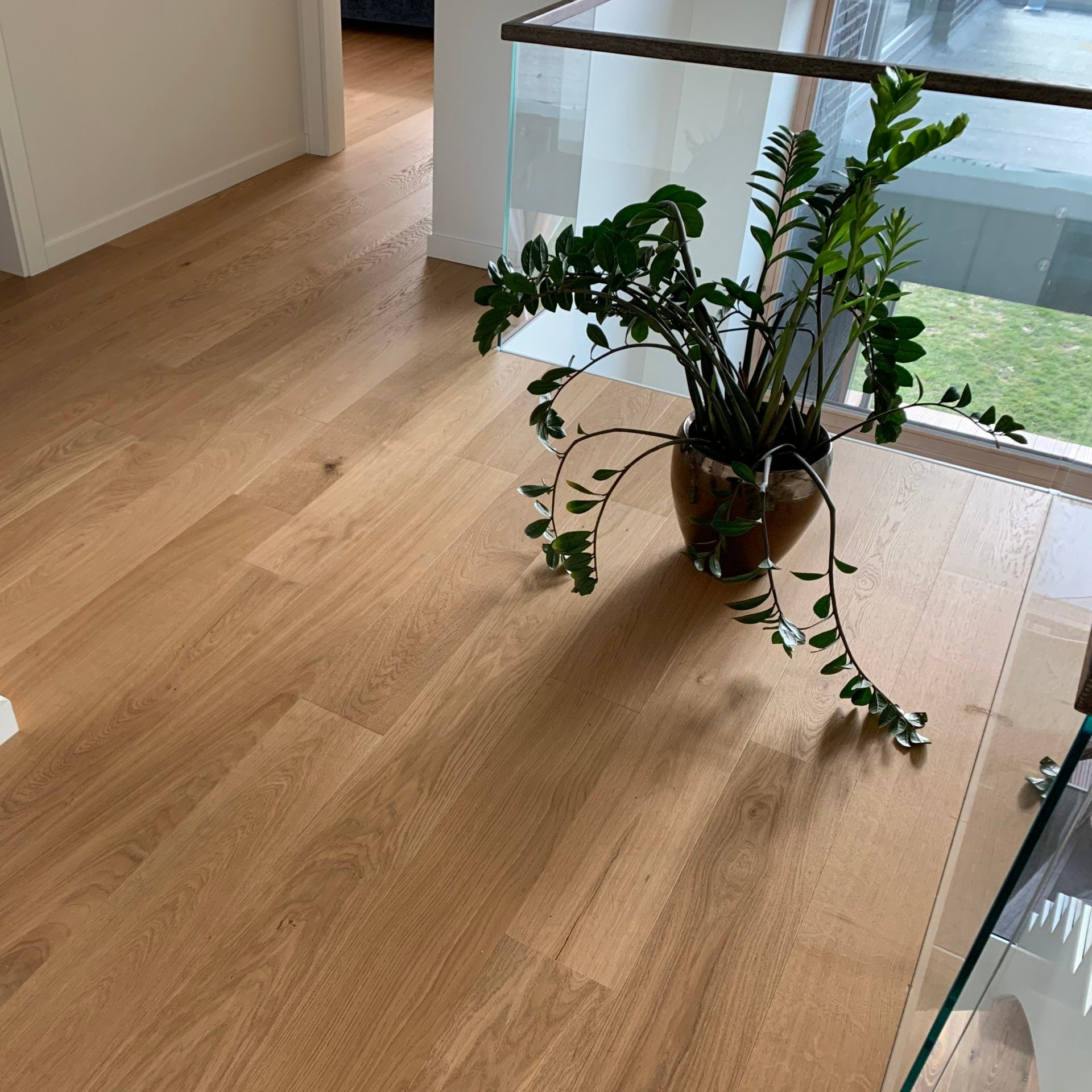
If you're looking for a short answer: Three-layer (engineered) parquet is the best choice for modern apartments, especially if you have underfloor heating, want a floor that stays stable when humidity changes, and fast, cost-effective installation.
Solid parquet is an elite, long-term investment in 100% solid natural wood. It is irreplaceable in classic interiors and historic houses without underfloor heating, since its service life exceeds 70–100 years and it withstands 5–7 rounds of sanding.
1. What is the difference between solid and three-layer parquet? (Structural analysis)
To understand why these two floors behave differently in a home, we need to look at their internal engineering structure:
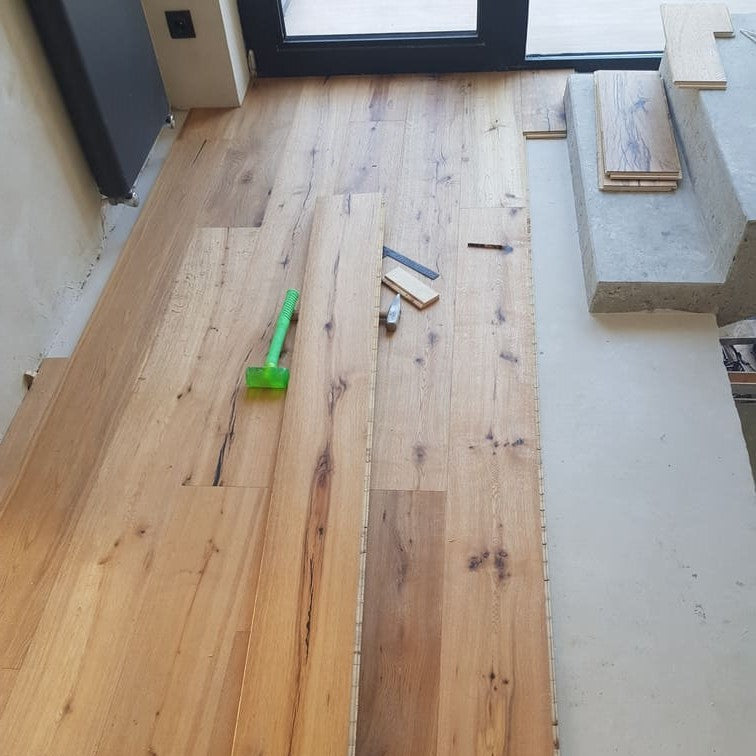
Solid parquet (Solid Hardwood Parquet)
- Composition: made from 100% solid natural wood boards (most often oak parquet, acacia, beech).
- Thickness: typically 15 to 22 mm.
- Physical property: wood is a hygroscopic (living) material. A solid board reacts to air humidity equally throughout its thickness: it expands in humid summers, and in winter, during the heating season, it dries and shrinks, which can cause gaps (cracks).
Three-layer (engineered) parquet (Engineered Wood Flooring)
Three-layer parquet is a modern achievement of wood engineering, created specifically to neutralize the natural movement of wood. It consists of 3 cross-laminated layers:
- Top wear layer (Wear Layer): 3 to 4 mm of noble wood (oak, walnut). Visually and to the touch it is 100% identical to solid parquet.
- Middle core (Core Layer): 8–9 mm softwood lamellas laid at 90 degrees (perpendicular) to the top layer, or a high-density HDF board. This layer blocks the lateral expansion of the wood.
- Bottom balancing layer (Backing Layer): 2–3 mm spruce or pine veneer that gives the construction symmetrical tension.
2. Full comparison matrix: solid vs three-layer
| Parameter | Solid parquet | Three-layer parquet | Winner |
|---|---|---|---|
| Material composition | 100% solid wood | 3 mutually perpendicular layers | Depends on needs |
| Stability with humidity | Low (prone to deformation) | High (70% less movement) | Three-layer |
| Underfloor heating | Not recommended | Ideal (certified) | Three-layer |
| Service life | 70 – 100+ years | 25 – 40 years | Solid |
| Sanding | 5 – 7 times | 2 – 4 times (depending on wear layer) | Solid |
| Installation method | Glue-down only + plywood | “Click” system (floating) or glue-down | Three-layer |
| Installation complexity and time | Complex, long (1–2 weeks) | Simple, fast (ready in 1–2 days) | Three-layer |
| Total cost (material + labor) | Very high (205–510+ ₾/m²) | Optimal (100–290 ₾/m²) | Three-layer |
3. Detailed analysis by key criteria
A. Compatibility with underfloor heating
One of the main questions in modern apartments: “Can parquet be laid over underfloor heating?”
- Three-layer parquet — the ideal choice: its cross-laminated structure withstands temperature changes. The heat transfer coefficient is within optimal limits. The floor surface temperature should not exceed 27°C.
- Solid parquet — high risk: thick wood is a natural thermal insulator and slows heat transfer into the room. In addition, direct heat from below dries the wood quickly, causing boards to warp, crack and open large gaps.
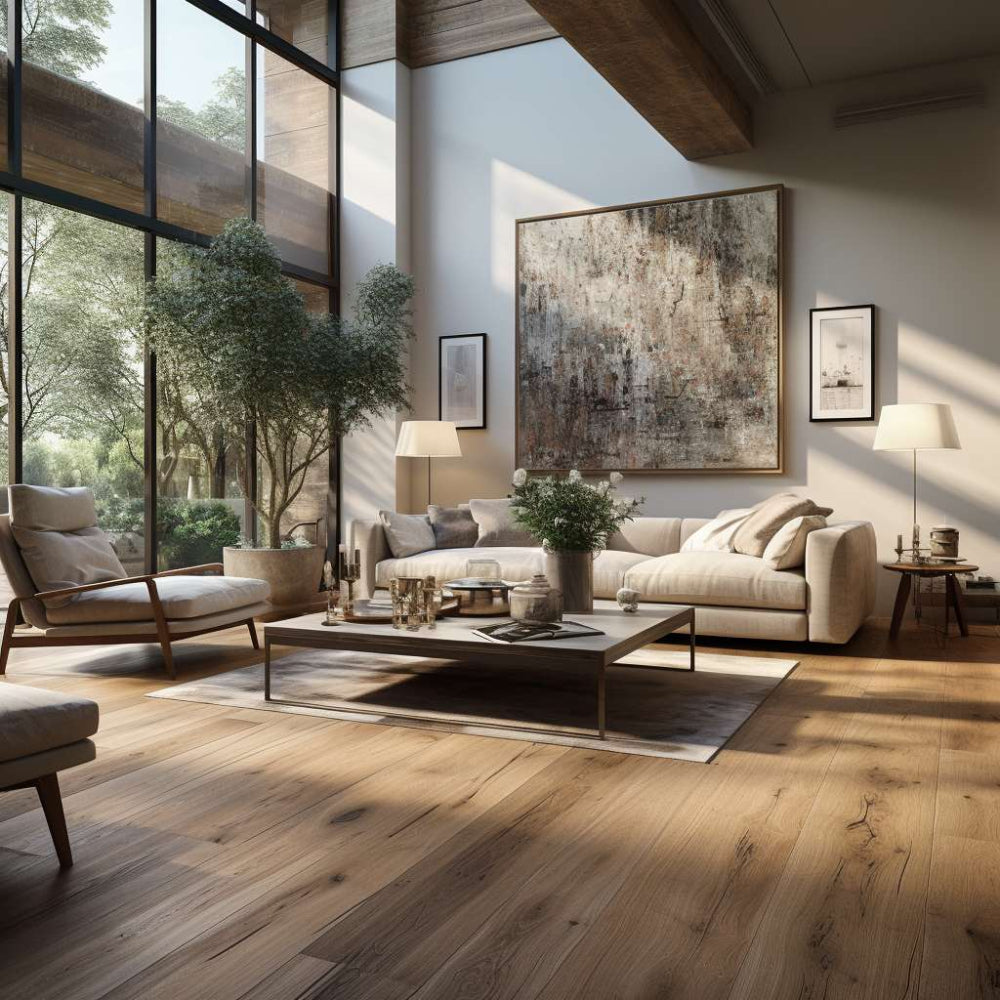
B. Humidity and climate stability
In Georgia's climate (the dry winter heating season or summer humidity), a wood floor is constantly tested:
- Solid parquet: when humidity drops to 30%, solid wood shrinks and micro-gaps appear. In summer (70% humidity) it expands and the edges may lift.
- Three-layer parquet: the opposite fiber direction of the middle layer neutralizes wood movement by 70–80%, so the floor keeps perfect geometry at any time of year.
C. Patterns and design (herringbone vs plank)
The laying pattern defines the visual perception of the interior. Today the most popular are English herringbone (Herringbone) and French herringbone (Chevron), both available in solid and three-layer versions:

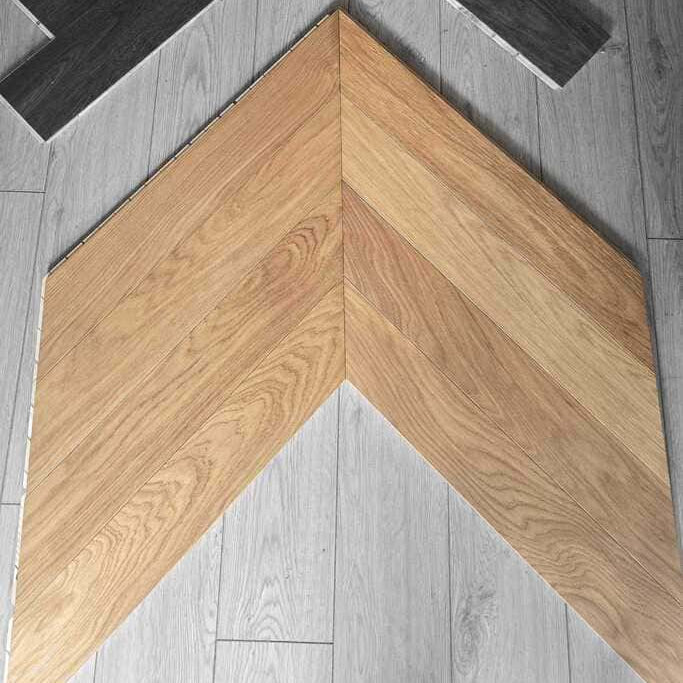
D. Restoration, sanding and service life
- Solid parquet (an investment for a century): since the board is entirely solid wood, it can be sanded 5 to 7 times. With renewal once every 10–15 years, solid parquet easily lasts 80–100 years.
- Three-layer parquet: a 3.5–4 mm top layer allows 2 to 4 full sandings (each sanding removes 0.5–0.8 mm). Its service life is 25–40 years, which is absolutely sufficient for a modern home.
4. When to choose which?
✅ Choose three-layer parquet if:
- you are planning or already have underfloor heating.
- you want natural wood on an optimal budget and a quick renovation.
- you like large-format, long and wide boards (1.8 m – 2.2 m).
- you want a perfectly factory-finished floor you can walk on right after installation.
👑 Choose solid parquet if:
- you are renovating a prestigious house for generations (with a 70–100-year perspective).
- you don't use underfloor heating (you heat with radiators).
- you value the monolithic nature and elite status of 100% natural, living wood.
5. Frequently Asked Questions (FAQ)
Can three-layer parquet be sanded?
Yes, it can. The top wear layer of three-layer parquet (3–4 mm) allows 2 to 4 sandings and renewals of lacquer/oil. If the parquet is glued down, sanding is as easy and effective as on a solid floor.
Is it better to glue three-layer parquet down or lay it floating?
The floating method (laying on an underlay with a Click lock) is faster and cheaper. However, the glue-down method provides solid acoustics (no hollow sound when walking), maximum underfloor heating efficiency and a guaranteed possibility of sanding in the future.
What temperature and humidity are optimal for a wood floor?
For both types of floor, the optimal room temperature is 18°C – 24°C and relative humidity 40% – 60%. In winter, when the heating is on, using a humidifier is recommended.