-
 On demand
აკაციის პარკეტი
Regular price 180.00 GELRegular priceUnit price 180.00 GEL/m²0.00 GELSale price 180.00 GELOn demand

Acacia parquet
The Warm Emperor with a Strong Character
Acacia parquet is more expensive than oak, yet it isn't as widely known. So, what drives certain wood lovers to invest significant sums and choose acacia for their floors instead of oak or other exotic species? Where are the weightier arguments that lead people to favor acacia? This is what I will talk to you about today.
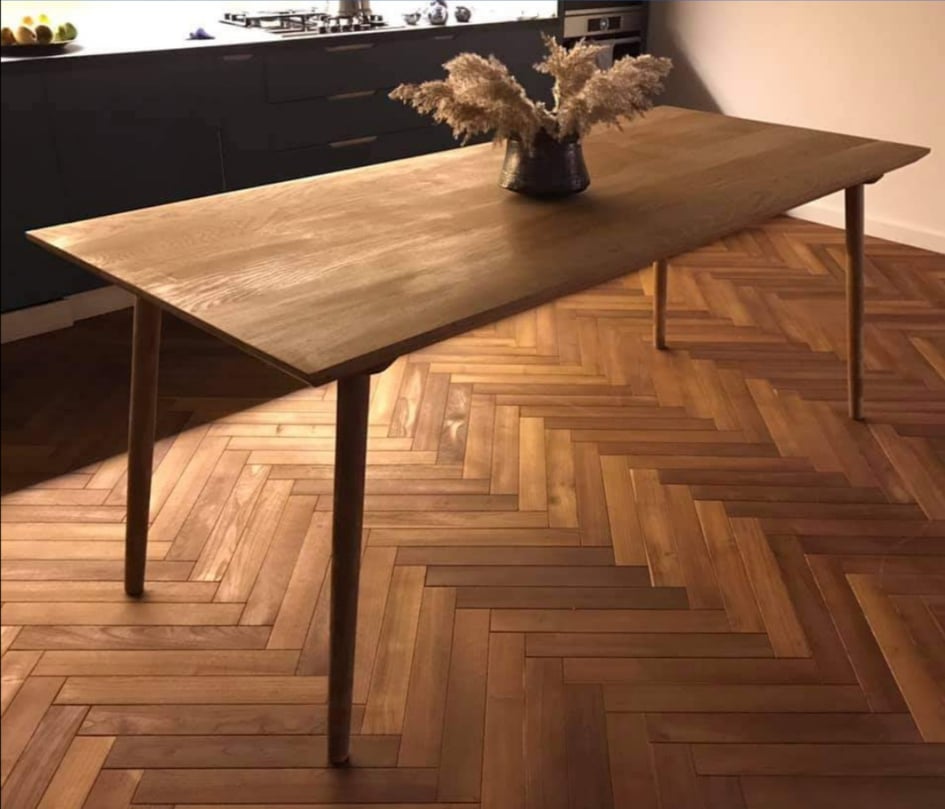
Acacia—you have at least heard the name, and you might have even seen the plant. It thrives in many parts of our region.
Before we move on to the parquet, I have to tell you what I found out.
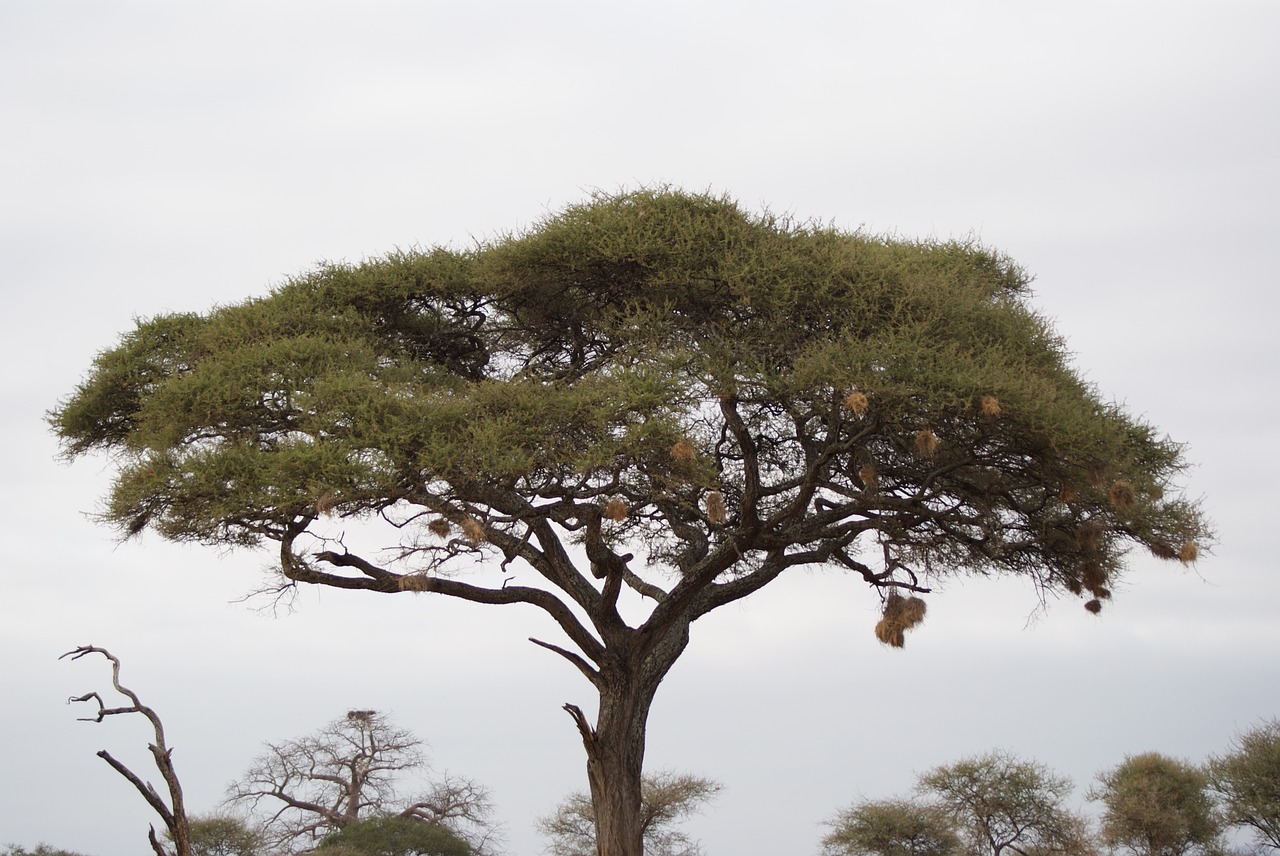
As it turns out, our acacia is actually not a true acacia; it is a "false acacia." The species that grows here and across Europe belongs to a different family—the Robinia family. The true acacia is African. True acacia is sensitive to winter climates, whereas Robinia is less so, which is why it is widely distributed across the European continent.
| The Original - African Acacia |
 |
Confused? I was confused at first, too. However, experts say that Robinia and Acacia are very similar to each other.
Let's continue to call our local species "Acacia" as we always have, and the parquet made from it "Acacia Parquet." Since many in Europe use this name as well, let's look at this:
|
Kartli, Kakheti – Akatsia; Rus. акация белая, лжеакация |
We don't have a Svan name in our database. It would be interesting to know what it's called in Svan. If you know, message me on Facebook or leave a comment on the product page.
In Racha and Lechkhumi, it is called "Lobioekala" or "Lobio Tree" (Bean Tree). Is it because beans are planted at the base of the acacia so they can grow tall? Or is there another reason? How fascinating.
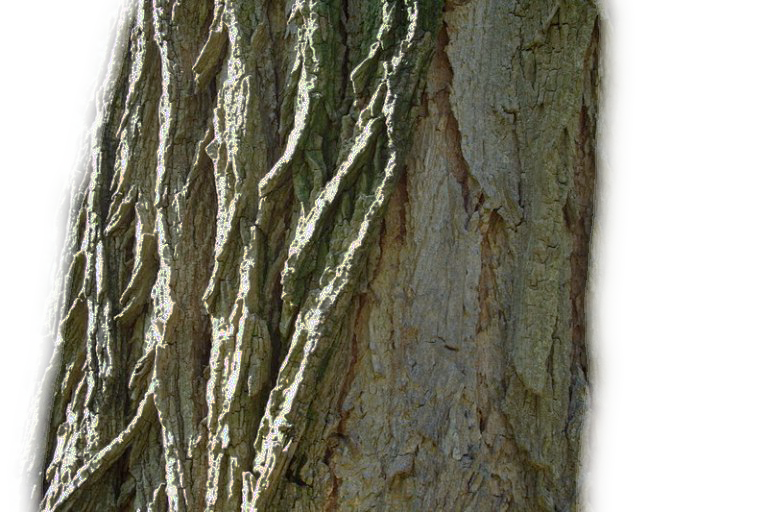
The tree reaches heights of up to 30 meters. The trunk is wide, dark brown, and has a deeply furrowed relief.
| Our Local Acacia Bark |
 |
Acacia blooms from May to June. The flower looks like this:
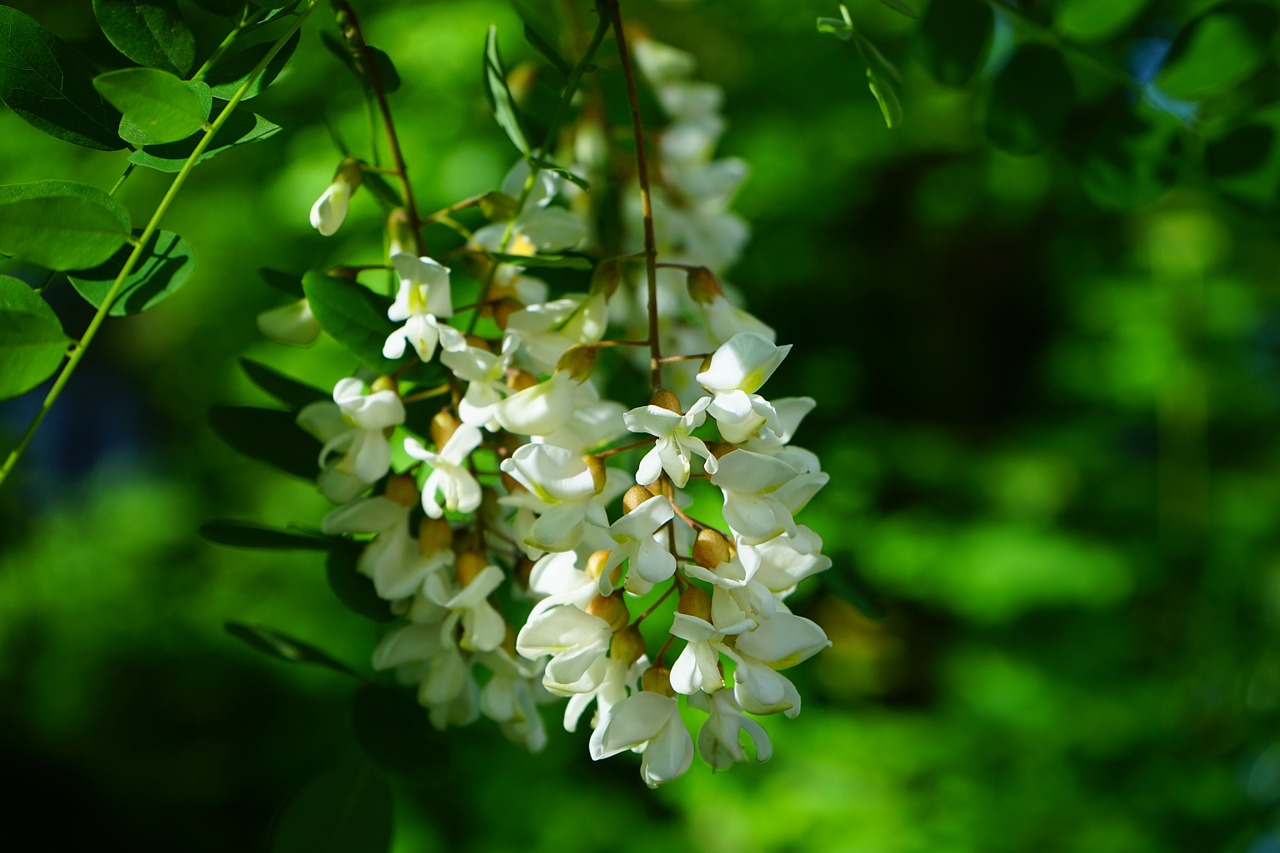
In May, when the acacia tree is in full bloom, there's a buzz of bees everywhere. This is when acacia honey is created. It is also called "May honey." It has a light, clear color. Have you ever tasted it? I have some from last year tucked away; let me get some for you to try.
Here you go. I've brought a spoon, too. Careful, don't spill it on your clothes!
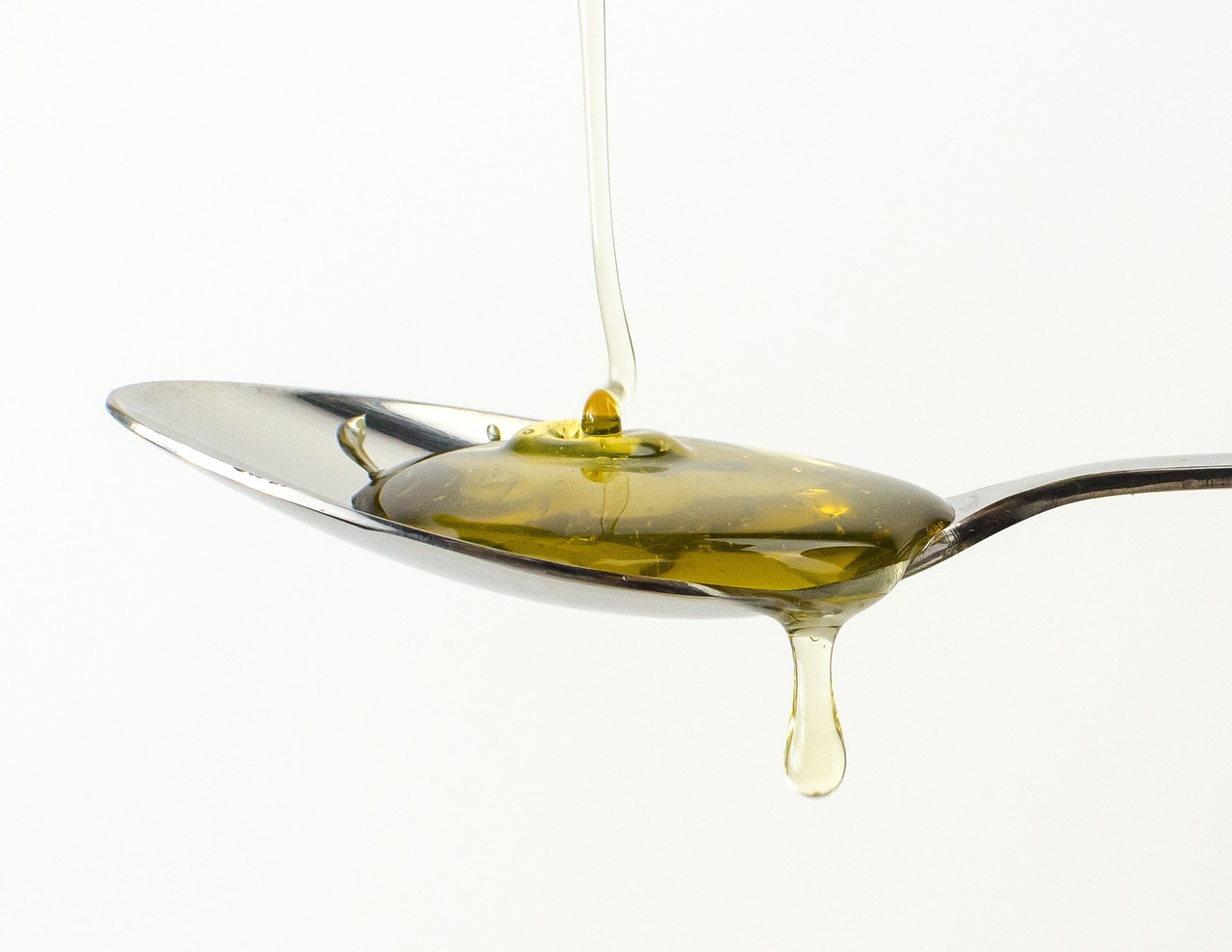
Delicious, isn't it? Acacia honey is considered one of the best for its taste and medicinal properties. Acacia parquet is among the best as well.
The Aesthetics of Acacia Parquet
A warm and pleasant brown, neither too light nor excessively dark—this is how the final color of the parquet can be described. A slight yellowish tone further enhances the perception of warmth. The linear structure of the wood is distinct. The intensity may vary depending on the grading, but overall, this parquet is a visually vibrant product.
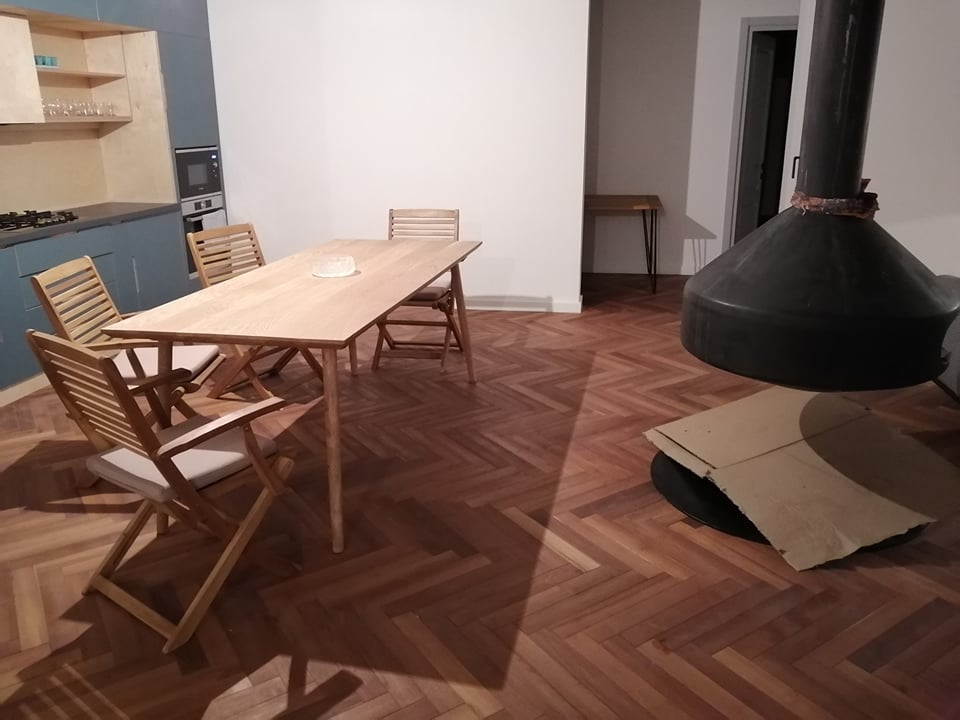 |
It is because of this warmth and depth that acacia parquet is so highly valued. It has fans in many countries.
In an interior, it is not overly dominant; it doesn't overwhelm the space, yet it remains quite presentable.
If you are looking for warmth and coziness in a room, acacia parquet is an exceptionally good choice.
Properties
Alongside its visual appeal, density and durability are the main advantages of this parquet. In these criteria, it even surpasses oak, which is widely recognized as the "King of Trees." If oak is the King, acacia must be the Emperor. Due to its extreme density, mechanically damaging its surface requires significant effort. Dents and scratches hardly stand a chance.
Another plus: Acacia parquet is resistant to fungi and wood-boring insects. While other wood items might be prone to pests, you can be at peace regarding this parquet.
Capping off the list of positive traits is its extraordinary resistance to moisture. While it isn't recommended to flood acacia parquet with water, minor contact with water and cleaning the floor with a damp cloth is not harmful to acacia.
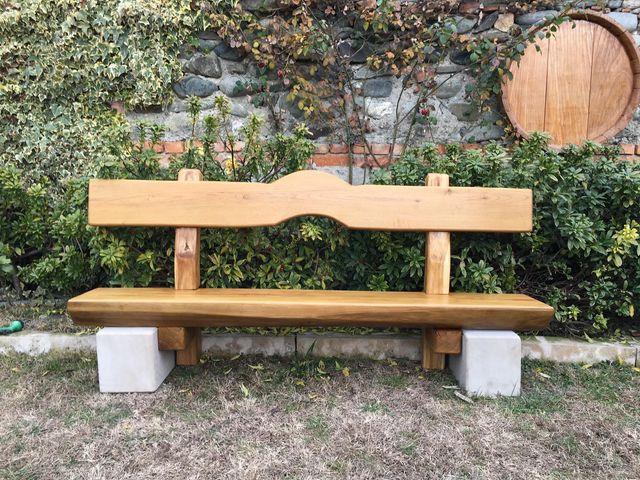
Due to its resistance to moisture, water, and steam, acacia is often used to make kitchen and bathroom furniture. It is also used outdoors for fences, vineyard supports, and terraces. Outdoor furniture is made from it as well.
Those who work with acacia say it is a very difficult species to process. Even driving a nail into it is reportedly difficult. This makes the relationship with acacia even more interesting.
| An Acacia Chair in Kakheti |
 |
These listed properties make acacia parquet a highly popular product among parquet connoisseurs.
Along with the pros, acacia parquet has one con: it adapts easily to environmental temperatures, resulting in a degree of expansion and contraction. In practice, this means it is not recommended for installation over underfloor heating. Since underfloor heating under wood floors is not very common here anyway, this disadvantage isn't a major deal-breaker.
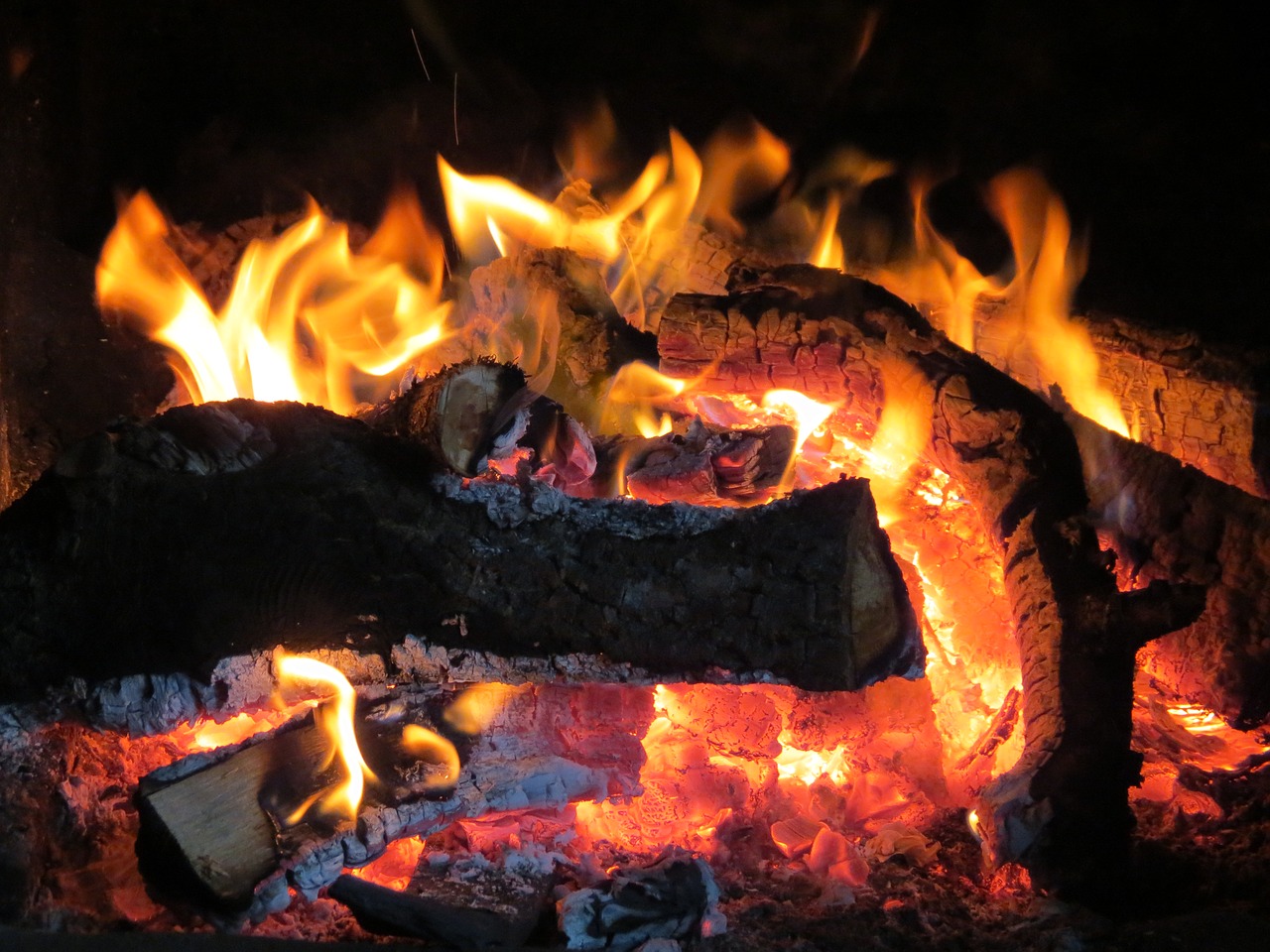
We can also highlight its thermal properties. It burns well. The heat from a fireplace goes deep into the body and warms your bones, though using it as firewood in a fireplace requires caution. When burning, acacia logs crackle and throw out bright sparks. You must be careful to avoid burning clothes or, far worse, starting a fire. One can tolerate ruined clothes, but a house fire is a serious problem.
That is all I have to say about acacia parquet today. What properties of acacia are you familiar with? Friend me and write to me on Facebook or Instagram. I would be happy to hear from you.
I wish you the wood floor of your dreams in the house of your dreams.
Yours, Nini
P.S. I want to introduce someone to you. The girl sitting on the sun-kissed acacia bench is Liza. A true appreciator of acacia, our friend, and her grandpa’s star.